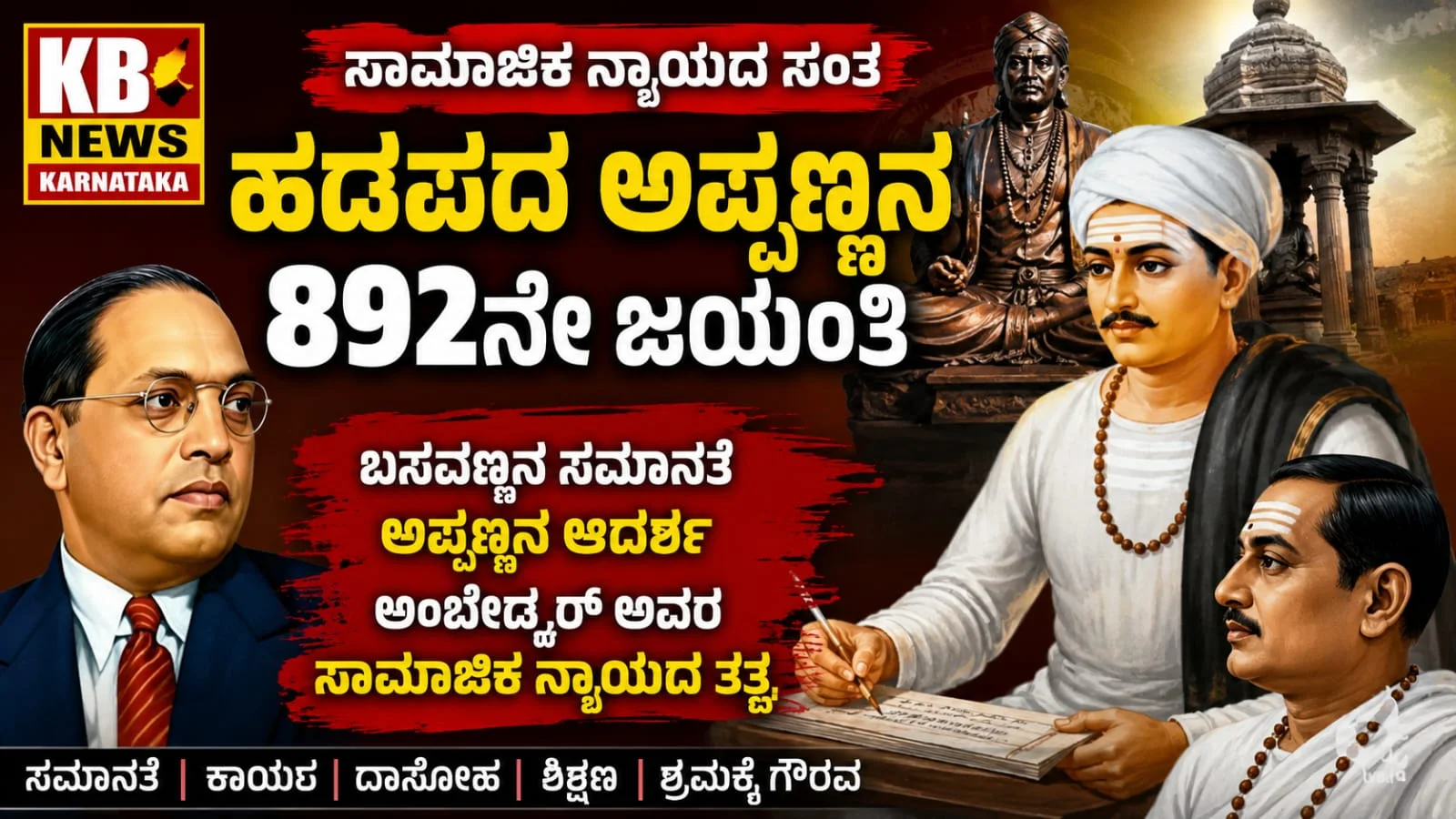
The 892nd birth anniversary of Hadapada Appanna, one of the prominent Sharanas of the 12th-century Sharana movement, is being observed across Karnataka today with devotion and respect. Hadapada Appanna made significant contributions to social reform by promoting the values of dignity of labour, equality, Dasoha (selfless service), and humanity.
A devoted follower of Basavanna, Hadapada Appanna embraced the philosophy of "Kayakave Kailasa" (Work is Worship) as the guiding principle of his life. Born into the barber community, he conveyed the powerful message that no occupation is inferior and regarded honest labour as a form of service to Lord Shiva. His life continues to inspire generations.
Hadapada Appanna actively participated in the Anubhava Mantapa, the spiritual and social parliament led by Basavanna. He strongly opposed caste discrimination, religious divisions, and social inequalities, dedicating his life to building an egalitarian society. Every step of his life reflected compassion, service, integrity, and human values.
He is credited with composing around 242 Vachanas, through which he explained the importance of devotion to Shiva, self-purification, truthfulness, honesty, and the dignity of labour in simple and meaningful language. His Vachanas remain a timeless source of inspiration for society.
While Basavanna and Hadapada Appanna propagated the ideals of equality during the 12th century, Dr. B. R. Ambedkar strengthened the principles of social justice and equal rights through the Constitution in the 20th century. The thoughts and teachings of these three great visionaries continue to remain highly relevant in contemporary society.
In today's world, it is essential to rise above the barriers of caste, religion, language, and social divisions by embracing education, hard work, brotherhood, and human values. Hadapada Appanna Jayanti is not merely a day of remembrance but a day to reaffirm our commitment to living by his ideals.
The vision of "Work is Worship – Equality is Dharma – Education is the Path to Liberation" can lead to the creation of a truly just, equal, and compassionate society only when it is embraced by every individual.